Or better yet, try flying the pattern a few times in this :
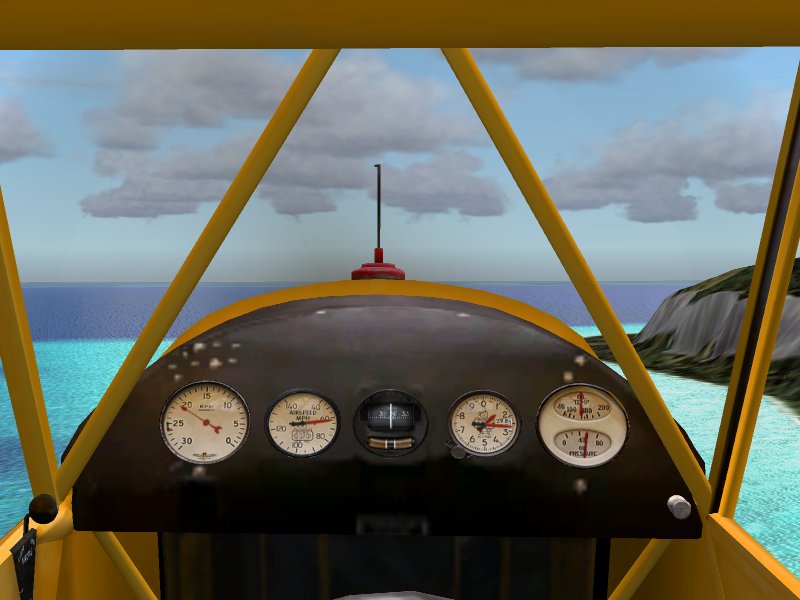
The default Piper J3 "Cub". Get the hang of flying this, then you'll be ready for all the complicated stuff. It is a sim, after all, not really a game: not quite as real as the real thing, but it's pretty darn close. It helps to know how to fly properly.
Just kidding (sort of); I gather that you are ready to fly airline-style... if you haven't got the info you need from the FS9 Learning Center and Lessons, I can only suggest you try it again... or pick up an IFR training video, or one on using autopilot, etc. There may be a definitive, complete "how-to" relating directly to FS9 available somewhere, but I have no idea where.
I have found a few manuals for various FS9 models (there are some available here in the downloads section); one of those might make things clearer. For example, Maltby's wonderful freeware VC10 comes with a very thorough explanation of the (admittedly antiquated) panel... there has to be something like that out there for the default airliners.
BTW, "vectors" are changes in direction issued by ATC when you are under their control...on an ILS approach, ATC will guide you to some point on the ILS approach, then it's up to you to land the plane. Not all planes have "Autoland"; the AP will keep you lined up, but you have to control descent rate and airspeed down to the runway. This is the only flying airline pilots get to do...

"Back course" etc: that's stuff related to instrument approaches; it'd be easier to understand if you'd learned to fly an approach manually first, and I'm new at IFR stuff myself, so I won't get into that here. I can't overstress the importance of actually flying with these tools: the definitions don't make much ense, sometimes, until you experience how it all functions.
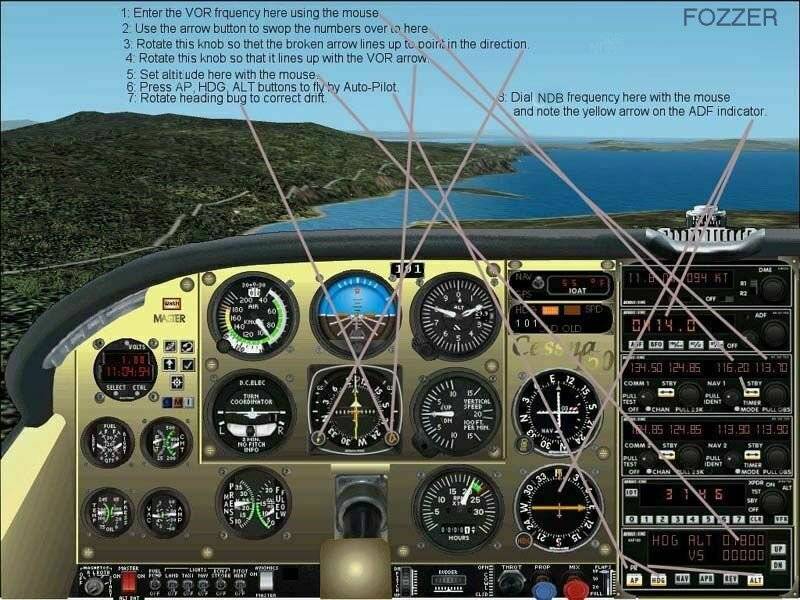
Getting back to the "basics first" argument: Fozzer's idea might be best: start small and slow (C172 is an excellent primary trainer); learn the basic radio nav stuff in VFR weather, learn to use its autopilot (very similar to the ones in the heavies, but everything happens slower, so it's easier), then move up to the fancy-dancy IFR stuff. It's very hard to just jump in at the advanced level... that's why all airline jockeys start off in something like a 172.








 ...!
...! ...!
...!