by wolfipilot » Thu Sep 20, 2007 9:34 am
Hey guys -
great question.
Has one ever tried those commercial simulators? I tried once for a B737-500 - believe me, it works. However, I had a.) a private pilot license and b.) quite a lot of sim-flying hours on a B737-700.
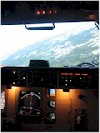
For what my experience is: flying a Boeing or an Airbus or what so ever bigger plane is not so much about "real" flying, it is more about the knowledge how to work with all the computers on board and to process the information you get. So the relevant question to me at first is: how realisitc is the virtual cockpit by means of how realistic is the cockpit-computer to be programmed.
Actually, as an example, the default GPS system is bullshit 'cause it simply doens't exist that way in a commercial jet. The pilot has to have a deep knowledge about the FMC for example. Next is the higly compex system of balancing, since there are different fuel tanks etc. ... So doing a full flight from scratch on, preparing, fyling, landing simply it's impossible.
On the other side that means also: in an emergency situation it should be possible to keep the aircraft in the air first of all because the experienced sim-flyer knows the meaning of the relevant cockpit information displayed by the PFD as well as the functionality of the autopilot. This helps to survice a couple of minutes.
In that first minute time you should have a chance to bring your transponder to 7777, signalizing an emergency, afterwards trying to connect to ATC. Those guys should be able to instruct you with most needed information: where are you, what to do, keep the airspace around you free of any other plane.
Than, under very best conditions, having vectors-to-final, a free airfield, a fantastic long runway, excellent weather, a sim-flyer's co-pilot to assist you - it could be possible to bring the bird down. Because real flying starts only at about 350 AGL.
Cheers
WP






 ?
?
 Intel i7 960 quad 3.2G LGA 1366, Asus P6X58D Premium, 750W Corsair, 6 gig 1600 DDR3, Spinpoint 1TB 720