Page 1 of 4
Flaps and Lift argument

Posted:
Fri Jul 11, 2003 9:25 pmby Lethal.Ambition
Allright so yesterday my friend was asking me about FS ( he recently bought one, I got him into it, even though I told him to wait till FSCOF comes out, anyways) and he starts to tell me how a plane can land without flaps
I tell him that A cessna or any little one can do it, but its a big job since the airplane tends to bounce and lift up again unless you really reduce speed. Even so, when you try to flare, since flaps are not set it will just fly in a straight line or climb up again.
He asks me what flaps do
I tell him that flaps, as far as I know it, help reduce lift by changing the shape of the wing ( since its airfoil shape causes lift) and it lowers the stall speed, making it possible for the airplane to land softly.
Here is the thing:
He tells that since the flaps help you flare and it is also used by Boeings and even the Concorde to help takeoff that the flaps cause lift, not destroy it.
I tell him that the flaps just cause the nose of the airplane to go up and since a big speed is not neccesary it can takeoff. I gave him the example of LearJets taking off Meigs.
Now he says that anyone can raise the nose of the airplane without flaps being neccesary. Now that I think of it is true. You can raise the nose of the Concorde, but it just won't take off. Boeings do takeoff, but after a while.
OK So I didn't know what to tell him. I did tell him he might be right and I might have the lift concept wrong.
So I thought to myself, where to else to go than to the experts here in SimV forums?
Hope you guys can help
Sorry for the lenghty post. Thanks!
Re: Flaps and Lift argument
Posted:
Fri Jul 11, 2003 9:33 pmby Smoke2much
As far as I am aware, and please remember I'm no aerodynamics expert, Flaps increase lift. They apparently do this by disturbing the airflow under the wing making a greater pressure differential between the upper and lower surfaces, thus increasing lift.
The added friction reduces airspeed at the same time making landing easier and roll out shorter.
Please feel free to correct me where necessary but remember I'm currently sitting on a medical ward with no access to any aerodynamics textbooks.

Will
Re: Flaps and Lift argument
Posted:
Fri Jul 11, 2003 9:47 pmby visitor
Is this clear

the word is drag

not what I spelled

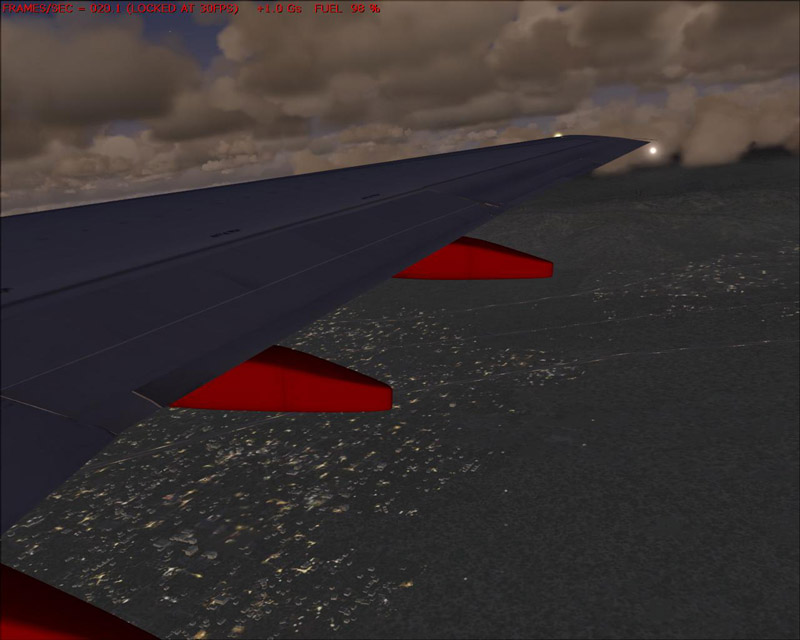
[img]http://www.simviation.com/yabbuploads/wing2.JPG
[/img]
Re: Flaps and Lift argument
Posted:
Fri Jul 11, 2003 9:49 pmby Smoke2much
The tate modern art gallery would pay about
Re: Flaps and Lift argument
Posted:
Fri Jul 11, 2003 9:50 pmby Wing Nut
More dgar? Wow, how do I get more dgar? I want more dgar!! :D
Re: Flaps and Lift argument
Posted:
Fri Jul 11, 2003 9:53 pmby Smoke2much
Isn't D'Gar Klingon for "I cannot draw to save my life but if any of you fools mentions this I'll cut your head off and defecate repeatedly down your neck stump"?
Will
Re: Flaps and Lift argument
Posted:
Fri Jul 11, 2003 9:54 pmby Paz
From Jeppesens "Aviation Fundamentals" book:
Using flaps
" When properly used, flaps increase the lifting efficiency of the wing and decrease stall speed. This allows you to fly at a reduced speed while maintaining sufficient control and lift for sustained flight. Remember, though, that when you retract the flaps, the stall speed increases.
The ability to fly slowly is particularly important during the approach and landing phases. For example, an approach with full flaps permits you to fly slowly and at a fairly steep descent angle without gaining airspeed. This allows you to touchdown at a slower speed."
This principle applies to take offs also, you can takeoff at a slower speed and shorter distance when you apply some flaps.
Re: Flaps and Lift argument
Posted:
Fri Jul 11, 2003 9:55 pmby Lethal.Ambition
So the flaps increase pressure on the bottom making it lift but also causing drag, making it go slow but still lift? I think I get it.
Re: Flaps and Lift argument
Posted:
Sat Jul 12, 2003 3:30 amby Calb
Actually, most of the "lift" a wing generates is due to the area of lower pressure on the TOP of the wing.
The Jeppesen description is excellent.
One important thing that hasn't been emphasized in this thread is that flaps have intermediate settings as well as full up and full down. Some aircraft have a single intermediate position (like most Beech) while others have several and still others are infiniately variable.
Basically, the intermediate settings provide the increased lift desired at slower speeds as mentioned above. Full flaps are applied to add drag to help slow down and for steep approaches. It varies with the particular aircraft.
Cal
CYXX
Re: Flaps and Lift argument
Posted:
Sat Jul 12, 2003 4:02 amby ozzy72
Guys a quick point only the Fowler Flap will increase lift, the Simple and Split flap just break up the airflow (have a look at a Seafire III if you don't believe me!)
A Simple just drops the back end of the wing downwards.
A Split has a small section of the lower back end drop, but the upper part of the wing doesn't change shape.
A Fowler is like on all modern jets.
Ozzy
Re: Flaps and Lift argument
Posted:
Sat Jul 12, 2003 4:21 amby Fozzer
....A Fowler is like on all modern jets.
Ozzy
Mornin' Ozzy...!
Am I correct in thinking that all my lovely little Cessna 150/152/172's, etc, all have "Fowler Flaps", where the flap is a hinged extension to the rear of the wing, (similar to the ailerons)?
Cheers mate...
...!
Paul.
(England).
Re: Flaps and Lift argument
Posted:
Sat Jul 12, 2003 4:27 amby Craig.
and on a side note concorde doesnt have flaps.
it has its adjustable nose to provide a little extra lift i believe, but on approach and decent it has a higher speed, and landing speed, thus it has to have a higer angle of attack on flare to maximise the wing as a speed brake to slow it down in a sufficient amount of runway.and like others have said flaps are used to increase lift at slow speeds,
Re: Flaps and Lift argument
Posted:
Sat Jul 12, 2003 4:41 amby Fozzer
and on a side note concorde doesnt have flaps.
it has its adjustable nose to provide a little extra lift i believe, but on approach and decent it has a higher speed, and landing speed, thus it has to have a higer angle of attack on flare to maximise the wing as a speed brake to slow it down in a sufficient amount of runway.and like others have said flaps are used to increase lift at slow speeds,
Mornin' Craig...
...!
That nose high flare is the one thing that stands out, and excites the on-lookers, using the whole of the underside of the wing as an air brake.
Amazing sight from day one...!!
I think the droop nose idea is just to allow the pilots a better view out of the cockpit when the plane is in a nose high flare...
...they can see where they're flippin' going...LOL...LOL...LOL..!
Cheers mate...have a good week-end!
Paul.
(Hereford).
Re: Flaps and Lift argument
Posted:
Sat Jul 12, 2003 4:44 amby Craig.
Good Morning Mr Fozzer:)
Learn something new everyday.
Thanks Mate
Re: Flaps and Lift argument
Posted:
Sat Jul 12, 2003 5:07 amby Hagar
Hi guys. The high angle of attack approach with Concorde (also the Vulcan) is a peculiarity of the delta wing planform. The delta wing is particularly stable at low airspeeds & impossible to stall. The ailerons on delta winged aircraft can often be drooped to use as flaps. These are named Flapperons.
Foz. Many light aircraft use the "Plain Flap" which works on a basic hinge. There is a variation called the "Slotted Flap" which involves an inset hinge point. The principle of a Fowler flap is different in that it slides back on a rail or track while extending, creating a gap or Slot between the wing & the leading edge of the flap. The Fowler flap has a streamlined aerofoil section to smooth out the airflow in the slot. Most modern airliners use a more complex multi-slotted Fowler flap like this example on the Boeing 727.

Generally, all types of flaps cause both increased lift & increased drag.
Devices for increasing drag alone would not be flaps but airbrakes. As Calb mentioned, flaps usually have multiple positions used for different parts of the flight envelope. All you ever wanted to know about flaps here.
http://www.rmcs.cranfield.ac.uk/aeroxtra/e348wingdespflap.htm