
Simviation Forums
Flight Simulator and other chat
Flight Simulator and other chat
 by alrot » Wed Sep 14, 2005 11:51 am


by Midnight_LS1 » Wed Sep 14, 2005 3:10 pm

This oscillatory motion consists mainly of a combination of roll and yaw - supposedly resembling the staggering behaviour of a Dutch sailor, hence the name. The effects are quite unpleasant for the aircraft's occupants so is not tolerated in the majority of aircraft designs. This usually results in a trade-off with the spiral divergence behaviour discussed above, particularly regarding the wing dihedral angle of the design. Typically, the motion has a period of 5 seconds or so. It tends to be more of a problem for swept-wing aircraft than straight-wing aircraft.

by alrot » Wed Sep 14, 2005 3:21 pm
by expat » Thu Sep 15, 2005 1:40 am
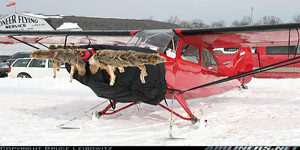 People Eating Tasty Animals.
by Midnight_LS1 » Sat Sep 17, 2005 5:02 pm
by expat » Sat Sep 17, 2005 6:54 pm
People Eating Tasty Animals.Return to FS 2004 - A Century of Flight
Users browsing this forum: No registered users and 154 guests