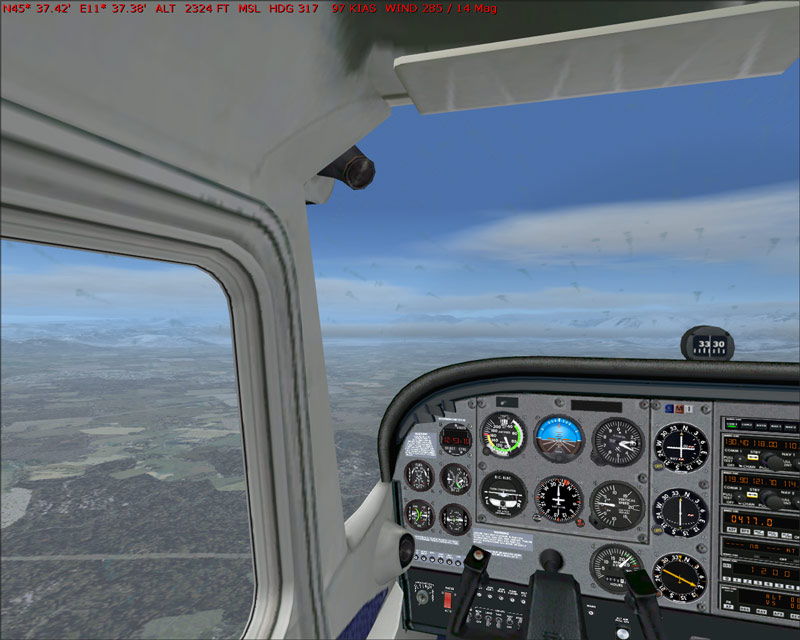
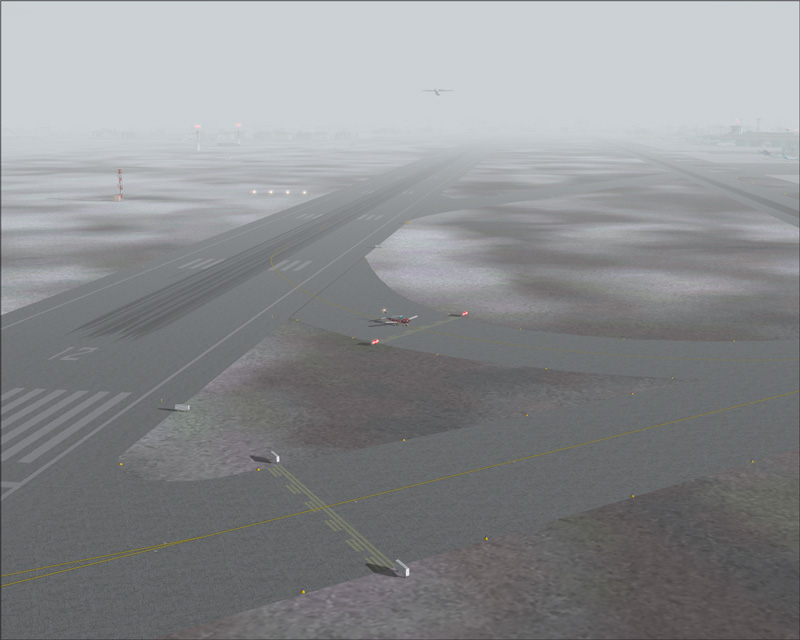
Were there any clouds at all over the airport? What was the altitude of the cloud bases in feet above the airport elevation (AGL)?
Generally speaking, VFR (Visual Flight Rules) departures and arrivals are not allowed- or very smart- if visibility on the ground at the airport is less than 3 miles and/or there are clouds at less than 1000 feet AGL (Above Ground Level- not to be confused with MSL or Mean Sea Level).
I believe the rule extends to 1/2 mile from the airport boundary or something like that. So a towered field will not let a VFR flight in under low clouds even if a mile away it is perfect VMC (Visual Meteorological Conditions). This is usually not a big deal unless its a solid overcast (clouds tend to drift with the wind, which might eventually create an opening to allow arrival)... in which case you shouldn't be up flying under VFR anyway.
At a nontowered field you can probably get away with taking off or landing under illegal wx conditions, but if you crash people will laugh at you at fly-ins.

It's a good rule: I've flown in RL at FAA minimums for VFR (in the pattern), and it's pretty scary. Not so much the clouds as the visibility: if I'm forced down to 1000 AGL by clouds, I want to be able to see more than 3 miles ahead.
It's odd that FS9 is strict about this rule, but doesn't mind if you shoot an instrument approach way below minimums...

The complete rules regarding VFR limits, at airports and enroute, in all airpaces, etc, etc, is too long to get into here: google around for online excerpts of the FAA regs if you want more info.
But generally speaking, as far as airports go, the rule is 1000 feet AGL and 3 miles visibility. Rain, snow, wind, frogs... none of that matters, as long as you can see more than 3 miles and climb to 1000 feet off the runway before you enter clouds.
I will tell you one thing: it's got nothing to do with wind. The "I" in "IFR" stands for "instrument"; the "V" in "VFR" stands for "visual".