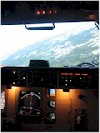
Fuel planning is fairly simple. Don't trust the navlog-you need to figure it out yourself.
This is assuming you're flying jets, although this will work with any plane. Plan a flight with the plane, one that you're familiar with so you know ho wmuch fuel to load. Get up to cruise, set it to cruise speed, and note the Fuel Flow (FF) from each engine. It will be in lbsx1,000 (e.g. a FF of 3.8=3,800 pounds per hour (PPH)).
Now, add the FF from each engine to get an overall FF. (e.g. in a two-engine 3.8=3.8=7.6. This means that, at cruise, you are burning 7,600 PPH). Write this FF down somehwere, and also note if you were flying in a headwind/tailwind.
Now, for your next flight, after you've calculated youre estimated time en route (ETE, if you're not sure how to do that, FOR DEFAULT PLANES just take the navlog time and add 20 minutes. On some addon planes, the navlog doesn't correctly detect the addon plane's cruising speed and will give you a much higher ETE), take that (in decimal form, eg 6:06=6.1) and multiply it by your cruising FF, then add a reserve.
So, this is how I planned my flight from New York to San Juan in a 757-200 today-
I calculated my ETE as 3:17, which I converted to 3.3. I am extremely experienced with this aircraft, and have a bunch of FFs written down. For cruising at FL350 in a crosswind I had 6,250 PPH written down as my FF.
So I take
6,250PPH x 3.3=20,625 lbs. This is how much fuel will be used in cruise.
Then, you add reserve fuel. Normal reserve fuel is about 11,000 lbs, enough for an extra hour and 45 minutes of cruise flight. However, today there is a storm brewing over Peurto Rico, and want to extend my options, so I load 13,000 lbs.
My final, overall fuel comes to 33,000 lbs. When loading this into the plane, fill the left and right tanks to capacity first, and when those are full, then fill the center tanks.
If you need anything cleared up, just drop me a line.





 Intel i7 960 quad 3.2G LGA 1366, Asus P6X58D Premium, 750W Corsair, 6 gig 1600 DDR3, Spinpoint 1TB 720